As the CSI arm of Vodacom -– one of South Africa’s largest ICT companies – the Vodacom Foundation leverages the organisation’s enormous technological capabilities to connect people, create opportunities and change lives.
“Connecting does not simply mean bringing people digital connectivity,” says Taki Netshitenzhe, Chief Officer of Corporate Affairs for the Vodacom Group. “However, connecting also means emotional connection – bringing people together to maximise impact. Through partnerships we are able to develop projects that are impactful, sustainable and scalable.
We also believe that large organisations like ourselves have an important role to play in assisting Government to reduce poverty and inequality, and to address other societal challenges and needs guided by the sustainable development goals, while at the same time making profits. In the CSI space, where we give back without making profits, we are currently working with the relevant Government departments and partners from the private sector and civil society to make an impact in the areas of education and gender empowerment.”
Education ecosystem
In March 2019, Vodacom launched its new initiative in the education space – namely a multifaceted education ecosystem model in partnership with the Department of Basic Education (DBE), the Nelson Mandela Foundation, UN Women and Global Citizen. Aimed at supporting education from childhood through to adulthood, leveraging technological innovations and promoting digital literacy.
The ecosystem will transform South Africa’s education system by producing digitally literate individuals who will be relevant in the digitalization era. The education ecosystem is based on a school of excellence model, supporting 12 schools from each official language group across the country, and selected from the 3000 schools that Vodacom has supported with Information Communication Technologies since 2008.
“We have isolated a small group of schools where we believe we can have an immediate impact,” explains Netshitenzhe. Already formally launched in Limpopo and Kwazulu-Natal, the initiative incorporates infrastructure development, teacher training and the mobilization of parents, school governing bodies and local communities for buy-in and support. In terms of infrastructure development, Vodacom has spent over R 22.1 Million to provide the schools with a computer centre, improved security and decommissioned pit latrines. Each school of excellence is also close to an Early Childhood Development Centre (ECD), a Teacher Centre and a Vodacom ICT Youth Academy.
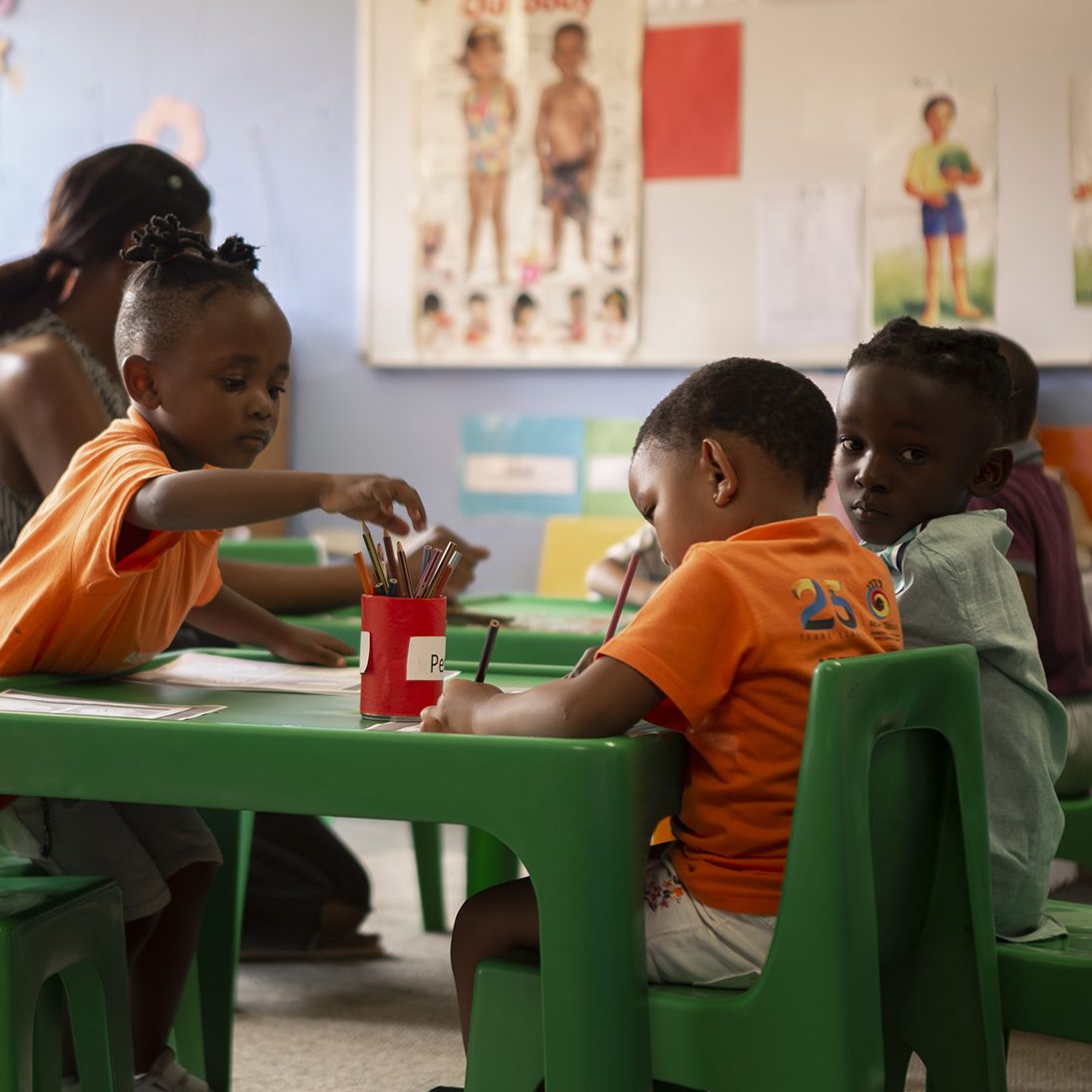
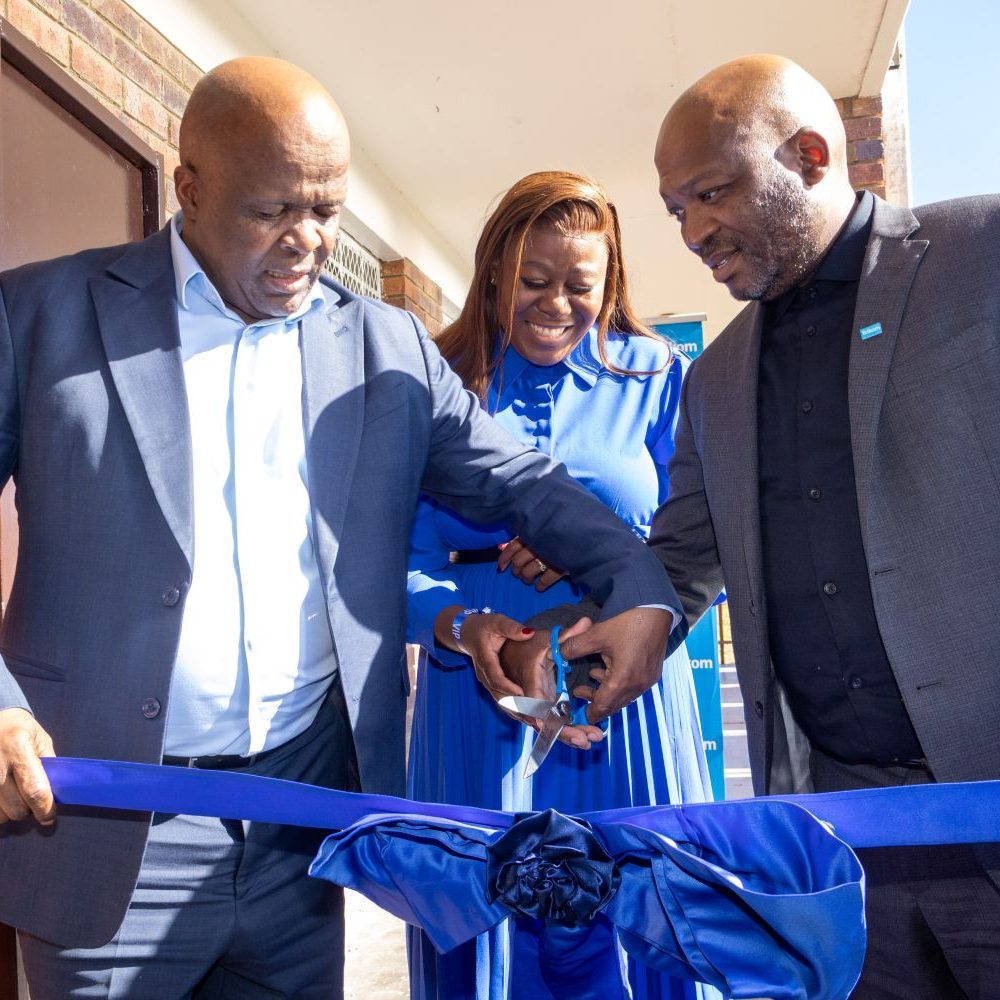
“As part of this initiative, the Vodacom Foundation has committed to upgrading and renovating 15 ECD Centres, of which six have already been completed at the cost of over R4.7 Million,” says Netshitenzhe.
This includes demolishing pit latrines and donating an ICT trolley and mobile library to each centre. Added to this, Vodacom has partnered with Government to connect its 147 Teacher Centres, located in each of the 9 provinces.
“We collaborate with the DBE for teacher training on the integration of ICT in the classroom,” says Netshitenzhe. “In the 2018/2019 year we spent over R12.7 million on providing unlimited connectivity to 92 of these centres, which also serve as technology hubs where members of the local community can access the Internet.” Aimed at talented yet disadvantaged learners in the maths and sciences sphere, Vodacom’s ICT Youth Academies provide accredited MICT SETA NQF Level 4 and 5 training programmes in device repairs, laptop repairs, networking, amongst others. Once again, this initiative stems from a partnership with Government and companies from the private sector such as Cisco and Microsoft, and this year we have added Google in the partnership.
States Netshitenzhe: “With Google we are adding an online element for digital courses to the programme, where members of the public, teachers and youth from our academies can register for the available courses and complete them online. Google brings courses such as coding, cyberbullying and other digital courses to our offerings in order to ensure a well-rounded level of education to our students especially to build soft skills.”
After graduating, alumni from the Academy are appointed at the Vodacom Schools of Excellence, where they are responsible for IT maintenance and repairs, digital literacy training and any ICT-associated troubleshooting. Over 1 300 graduates have directly benefitted from the Youth Academy intervention since inception.
The graduates are also paired with local NPOs in the area, where they get paid a stipend for a year whilst giving back in the communities through ICTs and gaining work experience. Part of their responsibilities with NPOs and Schools of Excellence include driving the Vodacom’s zero rated e School initiative, an online education platform offering access to Governmentapproved educational content to users between Grade R and Grade 12.
The e-school now has over 790 000 registered users, and research we conducted indicates that the primary users are from Grade 8 to 12 learners specialising in maths, physical science and accounting, especially during examination time. These numbers continue to rise on a monthly basis and also peak during the Government’s Second Chance Programme, an initiative aimed at Grade 12 learners who have failed Matric and are given the opportunity to rewrite their exams.

Gender Empowerment
Just like in education, digital literacy also forms the bedrock of Vodacom’s Gender Empowerment area of focus. This digital literacy program was introduced in 2017 as part of Vodacom’s gender-based violence victim empowerment program in the government supported shelters.
Through this literacy program, Vodacom has provided ICT training to over 1300 women at the cost of R 2.5 Million. Since 2014, Vodacom has partnered with the Department of Social Development in the setting up of Gender-Based Violence Command Centre. Members of the public are able to contact this centre and speak to trained social workers should they be in any danger, and can be referred to relevant community counsellors and the South African Police Services for further assistance.
To further enhance the Command Centre, victims of gender based violence from the deaf community are now catered for with the use of skype and sign language interpreters.
“We are in the process of partnering with our parent company Vodafone to introduce two apps to enhance the work of the Command Centre,” adds Netshitenzhe.
These apps will give us full visibility of the prevention, response and empowerment stages in gender-base violence. The first mobile-based App, a risk assessment tool called Bright Sky, already launched by Vodacom Lesotho, Vodafone UK and Ireland generates questions to guide users to determine if they are in abusive relationships.
Users can even keep an online journal, entering their experience of abuse which may then be used as evidence in a court of law. The second App – TechSOS – already being used by Vodafone Spain, will link the Command Centre directly to police stations for immediate response, as well as ensuring improved follow-up and closing of cases.
As the Foundation’s initiatives mature, we have now extended our digital literacy program to women farmers. In 2018, the Vodacom Foundation took the decision to assist small-scale women farmers in overcoming their various access barriers, with the help of the company’s Connected Farmer App, officially launched in 2017 for commercial farmers.
The App will give SAWIF (South African Women in Farming) full visibility of all the women farmers in the SAWIF database, and their farming activities, and help the farmers to access the markets. In the long run the App will allow farmers to sell directly to retailers without using a middle-man.
According to Netshitenzhe, the challenge however is that most of these women are from rural areas and are therefore not digitally literate.
“We have thus taken a decision to provide them first with the basic computer literacy skills required to be able to use Vodacom’s Connected Farmer App. Since inception of the programme, we have provided over 800 female farmers with ICT training at the cost of R5.1 Million, aiming for 1000 by the end of the year.”
“We are cognisant of the fact that we cannot touch all lives,” concludes Netshitenzhe. “However, our aim therefore is to make the greatest impact on those lives that we touch.” Promoting digital literacy as a whole is the anchor of what we do at the Vodacom Foundation in our Education Program, and we have now integrated these literacy initiatives into our Gender Empowerment Program. Together with our partners, we are committed to make the most meaningful impact for children in ECD Centres, learners, teachers, youth and women, especially from underprivileged areas.”