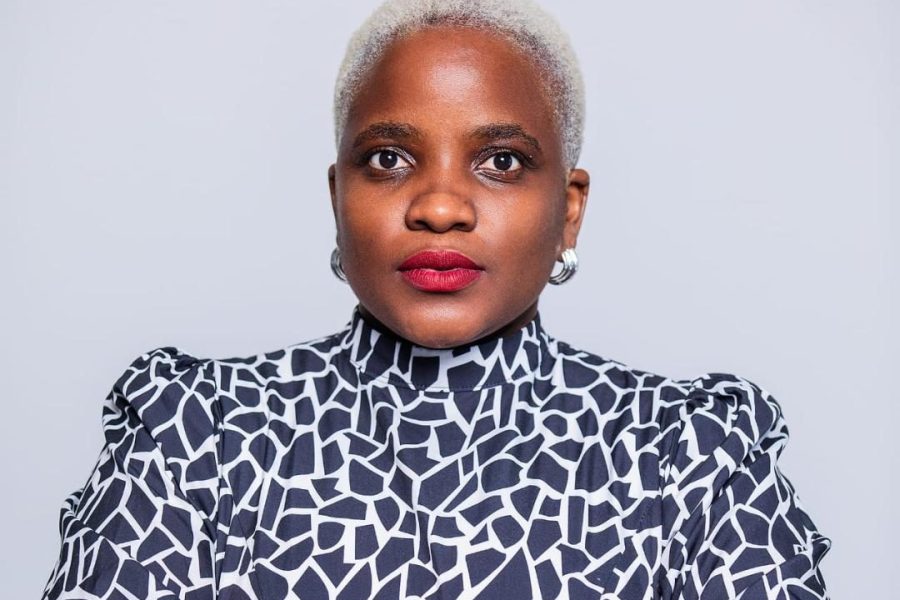
Experts at the World Health Organisation have long asserted that the next pandemic is an epidemiological certainty, yet the global systems designed to protect populations remain questionable. For Ngaatendwe Murombedzi, Regional Advocacy, Policy, and Marketing Manager for the AIDS Healthcare Foundation (AHF), this reality has recently become urgent beyond measure.
“It is both perplexing and inspiring that in 2026, we continue to address fundamental questions concerning the effective delivery of healthcare services to various populations. It is inspiring because it suggests a commitment to achieving optimal outcomes, yet perplexing and discouraging due to a perceived lack of urgency. As we deliberate, lives are being lost, and this will ultimately define the legacy of our actions and endeavours.”
The disconnect between systems, and the people they are meant to serve, sits at the heart of ongoing negotiations around the global Pandemic Agreement. Adopted in May 2025, the agreement should guide how the world responds to future health crises. But its efficacy hinges on a critical missing piece: the Pathogen Access and Benefit Sharing (PABS) Annex.
Closing the gap between access and equity
“The PABS Annex must ensure that when countries share pathogen samples and data, often originating in the Global South, that benefits – vaccines, diagnostics, and treatments – are equitably distributed. In essence, it should prevent a repeat of the COVID-19-era ‘vaccine apartheid’,” advises Murombedzi.
For southern Africa, equity cannot simply be a principle written into policy; it must translate into both real and measurable outcomes. “A truly equitable Pandemic Agreement is one that changes the lived reality. Without African countries standing at the back of the queue, cap in hand.”
In practical terms, this means guaranteed, timely access to life-saving tools; not charity or delay tactics. It also requires structural reforms: pre-agreed allocations of medical countermeasures, technological transfer to build regional manufacturing, sustained financial contributions, and open access to research outputs.
Without these, the systems currently in place risk reinforcing the very inequities they claim to solve.
Why voluntary measures fall short
AHF has been clear that the PABS Annex must be binding. Voluntary mechanisms, Murombedzi warns, simply will not work. “Benefit-sharing must be automatic and enforceable… Without it, we are left in a position of doubt.”
She outlines four essential safeguards that African nations can insist on in their upcoming negotiations: enforceable benefit-sharing, standardised contracts agreed upfront, full transparency through user registration and traceability, and intellectual property rules that prioritise public health over monopolies. Without these, powerful nations and pharma corporations could once again dominate healthcare access in a future crisis.
A particularly concerning proposal is the so-called “dual-track” model, which would allow companies to access pathogen data without binding obligations to share benefits. “This would create a loophole,” Murombedzi states.
For southern Africa, the consequences could be severe: local resources exploited commercially, limited access to resulting treatments, and a repeat of the inequitable distribution of essential resources seen during COVID-19. “We don’t want that exploitation; we want people accessing such a platform with the mindset of doing good and giving back,” according to Murombedzi.
Lessons from COVID-19 not to ignore
The lessons learned from the pandemic we’ve lived through have provided a headwind. Equity cannot be optional, delays cost lives, and regional production capacity is not a luxury; it is a matter of continental security. Most importantly, Murombedzi stresses, “Bad agreements are worse than none at all.”
Health equity must also extend beyond that of an emergency response. It should be embedded into everyday systems: through continuous funding, alignment with existing health programmes, and recognition of access to medicines as a fundamental right. “Health equity must be structural, not episodic when a crisis arises,” is Murombedzi’s professional take.
Time, however, is running out. The current negotiation round represents the last real chance for nations to finalise a meaningful PABS Annex before the World Health Assembly, 18-23 May. “Delay benefits those already well-resourced and entrenches the global imbalance… For southern Africa, time equals lost lives,” says Murombedzi.
Beyond policy, her perspective is grounded in lived experience and a deep understanding of how people interact with health systems. “AHF always says that ‘public health’ should be replaced with ‘people’s health’… but often policies, and their structure, don’t favour on-the-ground communities at all.”
Ultimately, the stakes go far beyond technical agreements. They touch on economics, dignity, and survival itself. “Healthy people make for stronger economies… you will invest less in prevention than you do in treating an ailing population,” she reflects.
The question now, is whether global leaders will pull out the stops, or allow history to repeat itself.