Food security is a daily reality for many South Africans. At Tiger Brands, we recognise that addressing it requires more than responding to immediate hunger. It means understanding whether the interventions we support are creating meaningful and lasting change in people’s lives.
Access to nutritious food is fundamental to helping people learn, grow and thrive. For Tiger Brands, this means using our scale, expertise and partnerships to support people today, while investing in initiatives that can contribute to greater food security and resilience over time.
Our programmes
Our programmes reach people at different stages of their lives and respond to different needs.
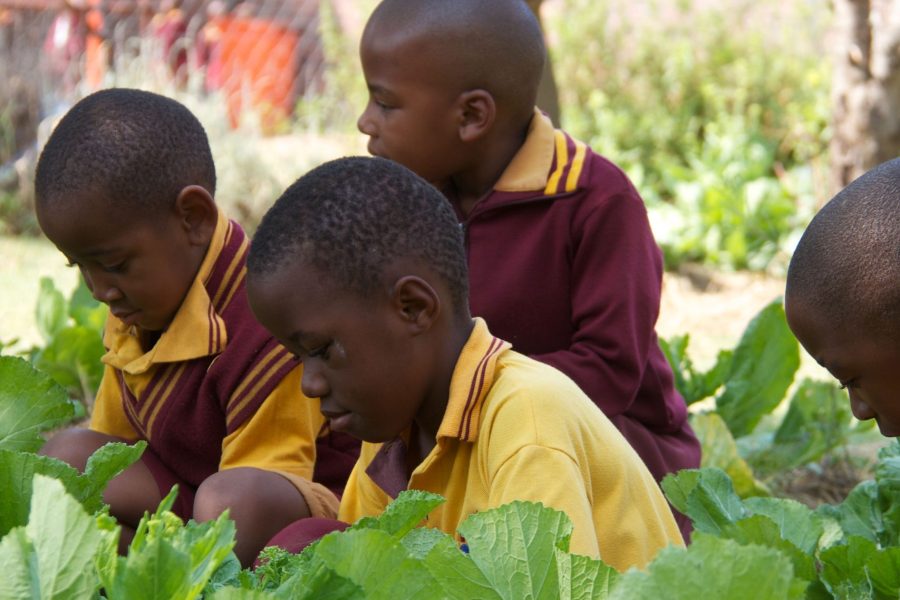
Through EduPlant, in partnership with Food & Trees for Africa, we support schools to establish sustainable food gardens that contribute to nutrition while equipping learners with practical knowledge they can take into their homes and communities.
Our Plates4Days programme provides nutrition support to vulnerable university students, helping to address student hunger so that young people can focus on their studies and their futures rather than empty stomachs.
Our work also extends directly into communities through community food gardens and the distribution of food hampers to vulnerable households, providing immediate relief while supporting greater food security over time.
Through the Tiger Brands Foundation, this commitment extends to children in schools, where the in-school breakfast programme provides learners with a nutritious meal at the beginning of the school day.
Together, these initiatives reflect an approach that goes beyond simply providing food to creating meaningful, lasting impact for individuals and communities.
Moving from outputs to outcomes
For many years, organisations like ours have measured success through outputs, including the number of food hampers distributed, schools reached, gardens planted or beneficiaries supported. These numbers matter because they represent real investment, effort and people reached.
But numbers alone cannot tell us whether lives have changed.
If we distributed thousands of food hampers, supported schools, planted gardens and funded community programmes, the real measure of success is not simply what we provided, but what changed as a result.
Are families healthier? Are children better able to learn and thrive? Are communities more resilient and better equipped to sustain themselves?
These are the questions that increasingly matter to us because meaningful impact is ultimately about the difference an intervention makes in someone’s life.
Partnerships for real impact
Tiger Brands’ purpose is to cultivate and nourish more lives every day and every tomorrow. We believe that purpose is realised when we work alongside others to create lasting change.
Improving food security in South Africa is not something one organisation can achieve alone. The challenges are complex and interconnected, spanning poverty and unemployment, nutrition, agricultural productivity, climate pressures, access to markets and the affordability of food.
Addressing these challenges requires collaboration between social partners, industry, government, academia, civil society and communities, with each bringing different expertise, resources and perspectives to the table.
For Tiger Brands, meaningful partnership is not transactional. It is not simply about a corporate providing resources and an implementing partner providing a report.
It is about sitting around the same table, understanding what is working, learning from what is not and designing better solutions together. When the relationship moves beyond reporting and towards a shared mission, partnerships can become stronger and ultimately deliver greater impact.
Using innovation to strengthen impact
Creating impact requires better tools alongside stronger relationships.
Over the past two years, Tiger Brands has worked with Trialogue to develop a digital monitoring and evaluation platform that helps capture both stories and data.
Instead of partners spending hours producing spreadsheets, the platform enables them to record meaningful information that can help us understand whether families are eating better, whether gardens continue to thrive and which interventions have the potential to be replicated across communities.
Technology helps us ask better questions, identify what works sooner and make better decisions going forward.